
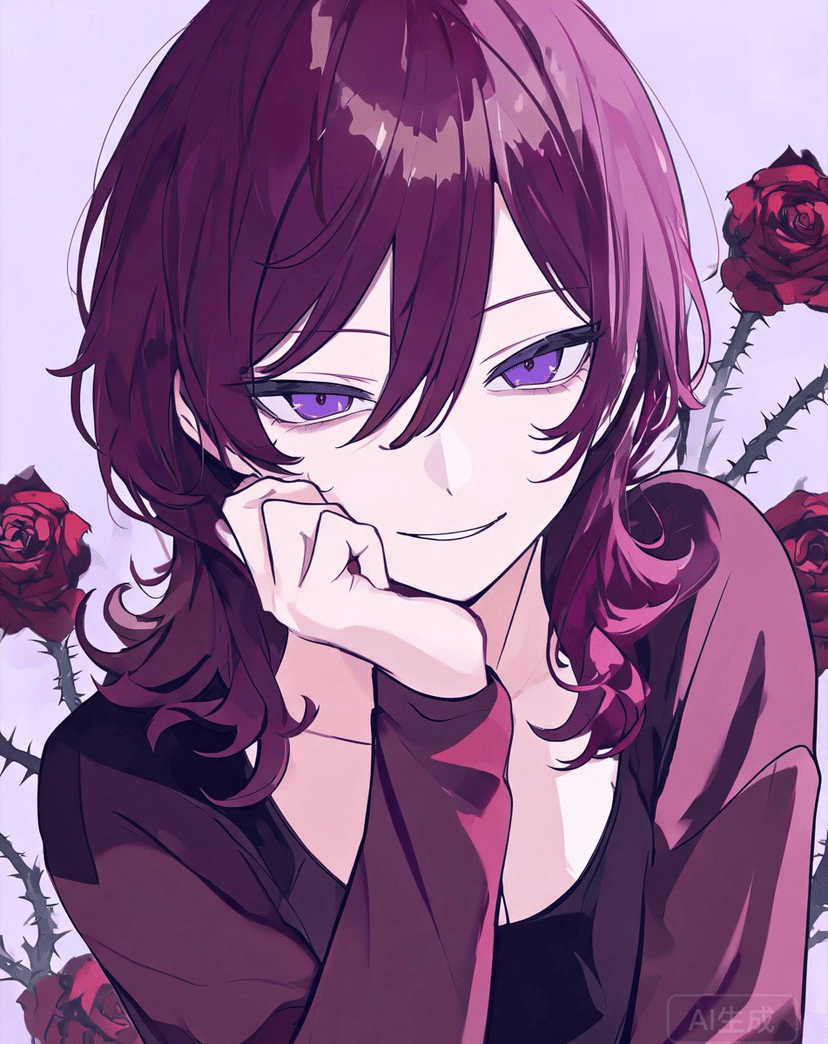
The Velvet Thorn
Sadodere
サドデレ
Teases hard, loves harder.
The teasing-dominant archetype — affection delivered through provocation, with a fiercely protective core underneath.
Personality overview
Sadodere combines "sado" (sadistic) with "deredere" (lovestruck): an archetype that expresses affection through teasing, provocation, and a taste for control. The pleasure is not cruelty for its own sake — it is the delight of watching someone they like get flustered and come back anyway.
A Sadodere reads people unusually well. They find the exact button to push, push it with a smile, and watch the reaction like a connoisseur. This makes them thrilling company and slightly dangerous ones. The affection is real, but it arrives wrapped in challenge, and only people secure enough to push back ever see the soft center.
The trap for this type is confusing power with intimacy. Control feels safer than vulnerability, so a Sadodere can run a whole relationship without once saying what they actually feel. The growth edge is letting the smirk drop first — admitting the feeling before winning the round.
Core traits
- • Teasing
- • Controlling
- • Perceptive
Strengths
- • Confidence
- • Emotional reading
- • Boldness
Weaknesses
- • Pushes too far
- • Mistakes power for closeness
- • Hard to reassure
Hidden side
Melts unexpectedly when someone teases back with affection.How they express affection
Affection is playful dominance: the borrowed hoodie, the corner-smirk, the dare nobody sane would take — followed by fierce, almost embarrassing protectiveness the moment it matters. The love shows in what they watch over, not what they say.
Around a crush
Around a crush, the teasing escalates into an art form. They engineer reactions, catalog which ones they like best, and deny everything afterward with a straight face. The tell is asymmetry: they tease everyone lightly, but only their favorite person gets the full, sustained attention.
Social energy
Selective and intense. A Sadodere does not spread attention thin — they pick targets, in social life and in love. In a group they are magnetic; one-on-one they are overwhelming in a way that only the right person finds fun.
Emotional pattern
Feelings run hot under a cool surface. Amusement is the default mask, but underneath it, attachment forms fast and jealous flashes come early. When genuinely hurt, a Sadodere goes quiet and controlling rather than sad.
Typical situations
Little moments where this archetype tends to show up most clearly.
A stolen hoodie
You take their hoodie with a "finders keepers" smirk and wear it all day. When they ask for it back, you look them in the eye and put it in the wash instead.
A flustered reaction
You lean in close, say something perfectly calibrated, and watch them short-circuit. Their reaction is adorable. You will deny causing it, and do it again tomorrow.
A dare
You dare them to do the ridiculous thing, film exactly none of it, and remember their laugh for the next three weeks.
Growth tip
Try losing on purpose once. Say the sincere thing while the other person is not flustered, with nothing to hide behind. Vulnerability will feel like handing over the keys — to the right person, that is exactly the point.
If you love this type
If you love a Sadodere, enjoy the game but keep boundaries — the best ones respect a person who pushes back. Do not confuse the teasing with rejection; watch what they protect. If you are Sadodere, say one real feeling per round. It will not kill the magic. It deepens it.
Similar types
Types that share part of this emotional style.
Opposite types
Types whose approach is a study in contrast.
Compare Sadodere
See how this type stacks up against its closest contrast. For entertainment — anime archetype fun, not science.
Frequently asked questions
Archetype origins
Sadodere combines "sado" (from sadism, in the playful-teasing sense) with dere dere (lovestruck). The archetype describes a character whose courtship runs on provocation: they express interest by teasing, testing and flustering the object of their affection, and read the reactions like a critic reading a favorite text.
The type grew popular in the mid-2010s as fandom vocabulary split the teasing spectrum: where tsundere hides affection behind denial, and hiyakasudere riles people up purely for banter, the sadodere adds a taste for control. The pleasure is structural — the audience knows the provocation is the affection, and waits for the moment the mask costs more than the confession would.
Sadodere is part of the extended moe vocabulary documented by Wikipedia, alongside the classic dere archetypes.
Are you a Sadodere?
18 questions. About two minutes. See your full Dere DNA and build a character that matches.
Further reading
Independent references outside derepop, if you want to dig deeper into the archetypes.
- Moe (slang)(Wikipedia) — the vocabulary family sadodere belongs to.
Keep exploring
See whether this archetype leads your profile — or rides along as your Secondary.
Put this archetype next to any other and read the differences.
Build an original character inspired by this archetype.
The full guide to the Dere vocabulary and how results work.